Decoded DFC — Getting Started Redesign
Redesigning the Design for Change onboarding for a learning community where motivation was high but consistency wasn't.
Problem background and context
"Before touching the onboarding flow we had to know whether people were leaving because of the content or because of how it made them feel."
To understand why a community with high stated motivation still lost members inside Getting Started.
Is the drop-off caused by interest, difficulty, or something the flow itself creates?
4h 18m of videos, codex activities, templates and uploads stood between joining and the first meaningful win.
The brief moved from 'users aren't interested' to 'users don't have enough scaffolding to continue when life interrupts them'.
A reframed problem statement plus four named root causes: content overload, weak progress visibility, post-miss friction, and a belonging gap.
Decoded DFC is the Design for Change EdTech community. The original Getting Started journey packed 4h 18m of videos, codex activities, project templates, reality-check tasks and uploads before learners experienced their first meaningful win.
Drop-off wasn't a motivation problem. It was a behavioral-scaffolding problem. The research reframed the brief from 'users aren't interested' to 'users don't have enough scaffolding to continue when work, family, health and time pressure interrupt their rhythm'.
Four root causes surfaced: content overload, weak visibility of progress, behavioral friction after even a single missed day, and a community-belonging gap for newcomers.
The team stopped proposing more content and started designing for continuation.
Calling it a motivation problem blames the learner. Calling it a scaffolding problem makes it a design problem we can actually solve.
Why this problem matters today
"We sized the leak before proposing a fix, so effort would land where the funnel actually bleeds."
To locate the exact stage where members stop, instead of treating retention as one undifferentiated number.
Is this an acquisition problem, an activation problem, or a consistency problem?
100% joined → 82% started GS → 65% engaged → 42% consistency drop → 28% momentum loss. 32% of fallen-off members were recoverable.
We stopped optimising the top of the funnel entirely and moved all design effort to the consistency stage.
A funnel map with the recoverable cohort isolated as its own design target rather than lumped into churn.
The funnel told the whole story: 100% joined DFC → 82% started GS → 65% initial engagement → 42% consistency drop → 28% momentum loss. 32% of fallen-off members were modelled as recoverable; 20.4% were unreachable.
DFC didn't have an acquisition problem — it had a momentum-retention problem. Reduced consistency cascaded into onboarding completion, live participation, project submissions and perceived membership value.
A shared, quantified target: the consistency drop, not sign-ups.
DFC never had an acquisition problem. It had a momentum-retention problem wearing an acquisition costume.
Target users identified
"One 'learner' persona would have hidden the only cohort worth designing for — the people who already left."
To separate learners by the constraint that actually stops them, not by demographics.
Do different members need different scaffolding, or does one fix serve everyone?
Four distinct constraints — scarce time, low confidence, a single missed day, and fear of posting a basic doubt.
The recoverable member became a first-class persona instead of an afterthought in a churn report.
Four personas — working professional, aspiring learner, recoverable member, community-hesitant learner — each with its own entry path.
Working professional — short windows, high intent, needs to make the next 10 minutes count.
Aspiring learner — high motivation, low confidence, needs visible early wins.
Recoverable member — fell off once, can be brought back with a no-shame re-entry path.
Community-hesitant learner — values the community but fears posting basic doubts; needs safe-first-post templates, AI doubt support, and a peer buddy.
Every feature debate now names which of the four it serves, or it doesn't ship.
Designing for the member who already fell off is cheaper than acquiring a replacement — and far more respectful.
Research approach
"We paired scale with depth so the numbers told us where to look and the interviews told us why."
To validate the drop-off pattern across the whole cohort rather than a handful of vocal members.
What happens in the hours and days after someone misses a session for the first time?
Psychological friction, not content difficulty, is the primary barrier — one missed day makes learners feel permanently 'behind'.
Recovery moved from a support concern to the central design surface of the whole product.
A journey map centred on the miss-and-return moment, backed by 162 survey responses and May retention data.

Surveyed 162 members across the Silver audience cohort, then layered in retention analysis from May data (52 total recoverable, 33 no-pickup).
Interviews and journey-mapping converged on a single insight: psychological friction — not content difficulty — is the primary design barrier. Once a learner misses a single day they feel 'behind' and stop, even though catch-up takes minutes.
A single insight strong enough to reorganise the entire Getting Started structure.
Catch-up genuinely takes minutes. The learner's belief that it will take hours is the thing the design has to fix.
Key insights
"We reduced weeks of research to three statements the team could design against without re-reading the deck."
To convert findings into decision rules rather than a document nobody opens twice.
Which patterns were universal enough to build on, and which were individual quirks?
Recovery is the highest-leverage moment; visible momentum beats encouragement; community is high-value but high-friction.
Motivational copy was dropped in favour of structural signals — progress, unlocks and small next actions.
Three design rules that later killed every 'send a reminder email' proposal on the spot.

Psychological friction beats content difficulty — recovery is the highest-leverage moment in the funnel.
Visible momentum signals (progress bars, badge unlocks, streak surfaces without shame) outperform exhortation.
Community is high-value but high-friction; newcomers need safer entry points before they'll post unprompted.
Faster decisions and a much shorter feature list.
Exhortation is what you build when you haven't found the structural fix yet.
Information architecture
"Structure carries the behaviour — four visible stages do more for consistency than any amount of encouragement."
To replace an undifferentiated content dump with a sequence a learner can see themselves progressing through.
What is genuinely must-do before a first win, and what is a deep-dive pretending to be essential?
Only about a quarter of the original journey was truly prerequisite; the rest could be optional without losing value.
Completion was redefined as reaching the first win, not consuming every asset.
Four stages — Welcome Orientation, Know Yourself, Power of One codex, Reality Reset — each ending in a visible unlock.
Restructured Getting Started into 4 stages with explicit momentum signals at every step:
Stage 1 — Welcome Orientation (mentor-led intro, what to expect, submission instructions, community + stationery checklist).
Stage 2 — Know Yourself (goal-setting framework, importance, Notion template upload).
Stage 3 — Power of One codex (7-part series; complete all three codices, upload via Notion template).
Stage 4 — Reality Reset (reality-check sheet → activity → template / G-Drive upload → final unlock).
The essential journey compressed from 4h 18m to 1h 15m of must-do content.
Nothing was deleted. Everything non-essential became an optional deep-dive, so depth stayed available without blocking momentum.
Solution
"If a missed day is the point of failure, then the return path deserves more design attention than the happy path."
To make coming back after a miss the easiest action in the product.
What is the smallest re-entry action that still feels like real progress?
A two-minute action restarts momentum; showing the full backlog reliably ends it.
Backlogs are hidden by default on return, and the next smallest step is surfaced instead.
The Momentum Recovery System, plus safe-first-post templates, AI doubt support, and week-one peer-buddy matching.
Built a Momentum Recovery System — when a learner misses a day, the system surfaces the smallest possible re-entry action instead of an intimidating backlog.
Added safe-first-post templates, AI doubt support, and peer-buddy matching at week 1 to lower the cost of participating in community.
Compressed the essential Getting Started journey from 4h 18m to 1h 15m of must-do content; everything else became optional deep-dives.
Recovery conversion modelled to lift from ~15% to ~50%.
Never open a returning learner on everything they missed. Open them on the one thing they can finish now.
Final UI
"The interface had to feel like an ally on a bad week, not a compliance dashboard."
To prove the behavioural model survives contact with real pixels and real tone.
Can a recovery surface acknowledge the gap without producing shame?
Red states and negative streak counters read as punishment; neutral tone with a clear next action reads as support.
The visual system dropped every failure cue and kept only forward-facing signals.
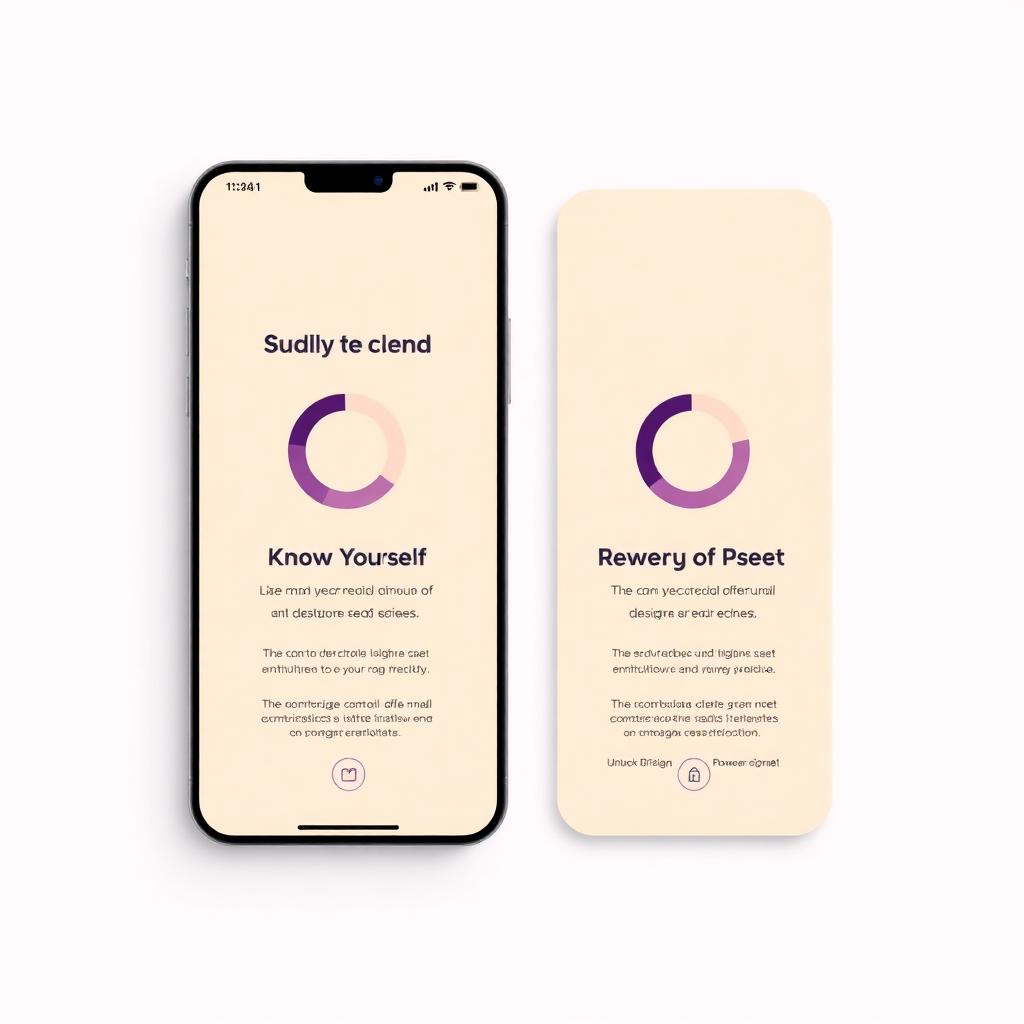
Stage cards with badge unlocks and an empathetic recovery surface where the next two-minute action is always obvious.
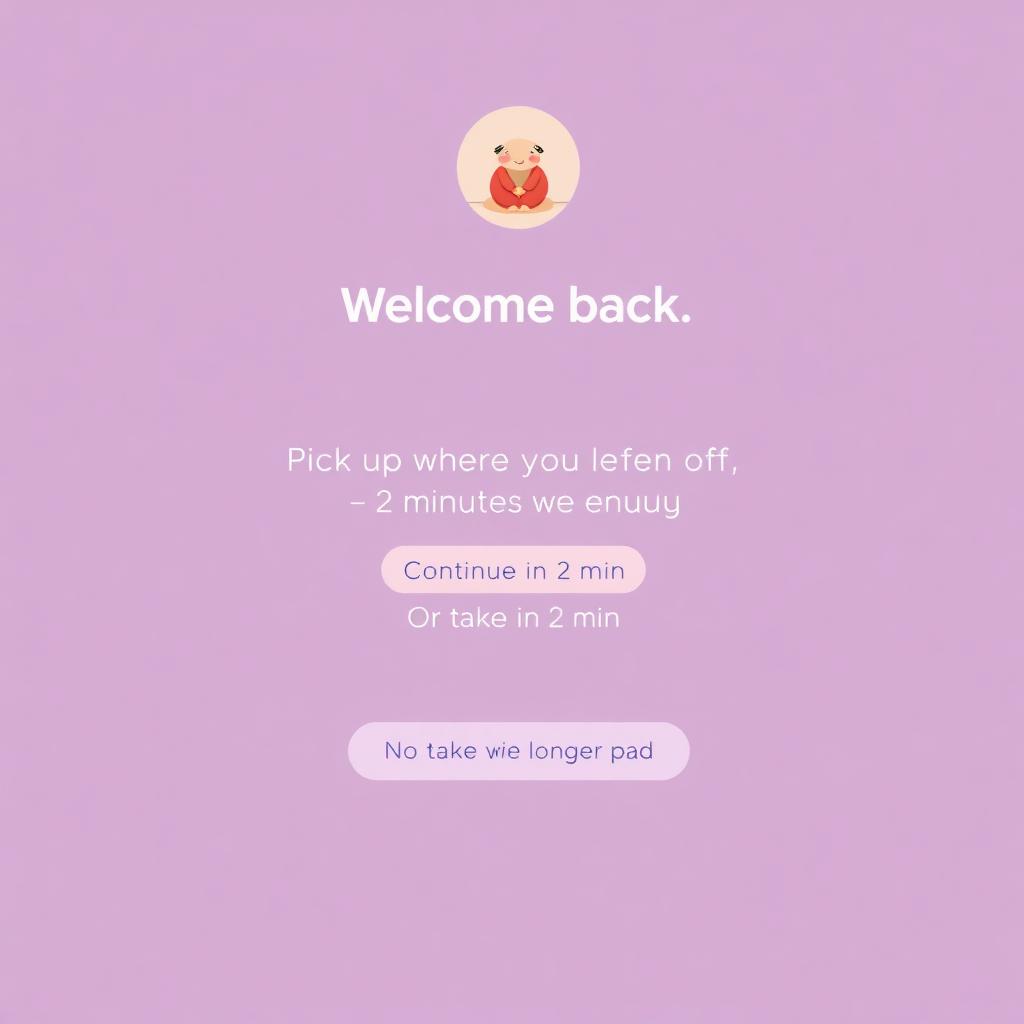
Progress stages render as cards with badge unlocks. The recovery surface is deliberately empathetic — no red, no negative streak counters, no shame language. Every screen makes the next 2-minute action obvious.
+32% projected completion rate from concept validation against the 162-member survey.
No red, no shame language, no negative streaks. The tone of a recovery screen is a design decision, not copywriting garnish.
What changed
- ●+32% projected completion rate from concept validation against the 162-member survey.
- ●Recovery conversion modelled to lift from ~15% to ~50% via the Momentum Recovery System.
- ●Essential Getting Started journey compressed from 4h 18m → 1h 15m of must-do content.
- ●Four structured stages with visible momentum signals replaced an unstructured content dump.